 SDS Studio™
Identifiers
| CAS number | 64-17-5 |
|---|---|
| EC number | 200-578-6 |
| CLP Index number | 603-002-00-5 |
| Formula | C2H6O |
| Synonyms | ethyl alcohol, alcohol, ethyl hydroxide |
Classification
Harmonised classification (CLP Annex VI): Flam. Liq. 2, H225
Common self-classification: Eye Irrit. 2, H319
Label elements
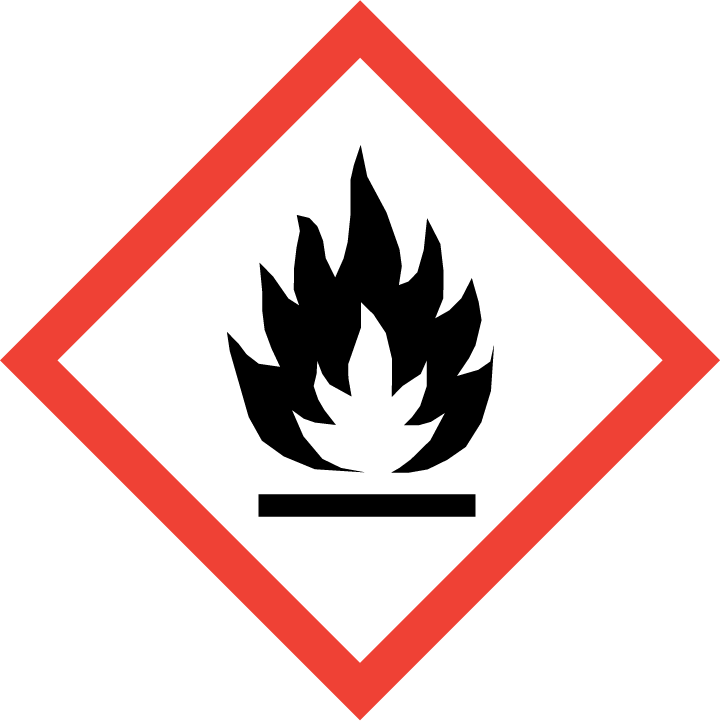
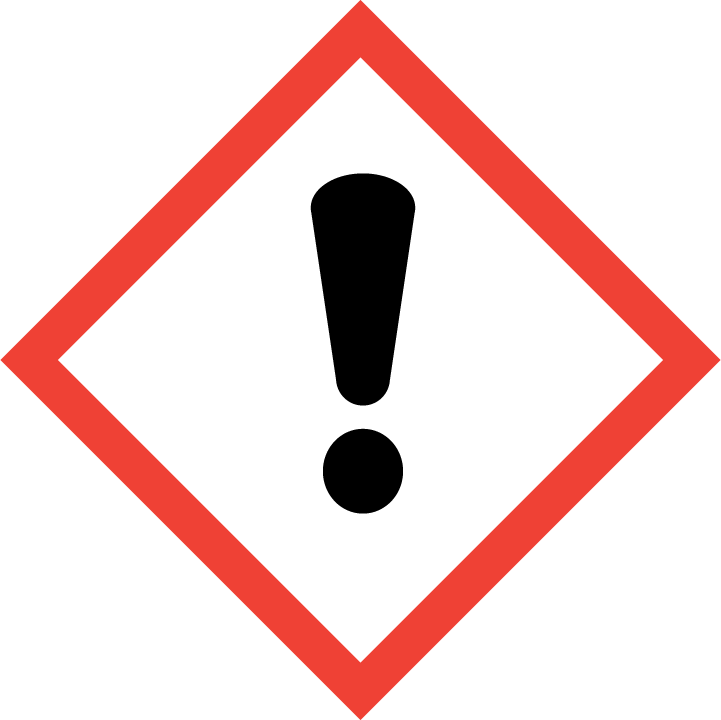
Signal word: Danger
Hazard statements
- H225 Highly flammable liquid and vapour.
- H319 Causes serious eye irritation.
Typical precautionary statements
- P210 Keep away from heat, hot surfaces, sparks, open flames and other ignition sources. No smoking.
- P233 Keep container tightly closed.
- P240 Ground and bond container and receiving equipment.
- P241 Use explosion-proof [electrical/ventilating/lighting/…] equipment.
- P280 Wear protective gloves/protective clothing/eye protection/face protection.
- P303+P361+P353 IF ON SKIN (or hair): Take off immediately all contaminated clothing. Rinse skin with water [or shower].
- P305+P351+P338 IF IN EYES: Rinse cautiously with water for several minutes. Remove contact lenses, if present and easy to do. Continue rinsing.
- P403+P235 Store in a well-ventilated place. Keep cool.
Occupational exposure limits
| Country | Limit (8 h) | Short-term | Source |
|---|---|---|---|
| HU | 1000 ppm / 1900 mg/m³ | 2000 ppm / 3800 mg/m³ | 5/2020. (II. 6.) ITM rendelet, 1. melléklet |
| DE | 200 ml/m³ / 380 mg/m³ | Excursion factor 4(II) | TRGS 900 (as amended 5 June 2026) |
| FR | 1000 ppm / 1900 mg/m³ | 5000 ppm / 9500 mg/m³ | VLEP indicatives (INRS) |
What to watch in your SDS
- Section 2: classify the mixture for flammability by flash point, not by ethanol content alone. Water-based products with low ethanol content may still be Flam. Liq. 3.\n- Section 8: list the national exposure limit of every country you sell into. They differ by a factor of five across the EU.\n- Section 14: ethanol solutions are usually UN 1170 (ETHANOL SOLUTION), class 3, packing group II or III.\n- Section 15: check national lists. The Netherlands lists ethanol on its SZW list as a carcinogen (1A) and as toxic for reproduction (1A, including effects via lactation), which triggers national workplace obligations.
Regulatory watch
Greece has registered an intention to submit a harmonised classification (CLH) proposal for ethanol (index 603-002-00-5), with an expected submission date of 31 December 2026 (ECHA Registry of CLH intentions). The proposed hazard classes are not yet public. If a new harmonised classification is adopted, ethanol-containing SDSs will need an update.
Sample SDS preview
This full 16-section sample SDS was generated in SDS Studio™ for the substance, with a fictitious supplier. It shows the format your own SDS gets. Download the sample PDF or create the SDS for your own product.
Need an SDS for a product containing Ethanol?
Build a complete EU SDS with CLP classification in about 10 minutes, in up to 28 languages. Your first project is free, no card needed.
Make it your own →Frequently asked questions
How is Ethanol classified under CLP?
Harmonised classification (CLP Annex VI): Flam. Liq. 2, H225. Common self-classification: Eye Irrit. 2, H319.
What H-statements apply to Ethanol?
H225 (Highly flammable liquid and vapour.), H319 (Causes serious eye irritation.).
What should an SDS for a mixture with Ethanol include?
Classify the mixture by its own data and concentration limits, list Ethanol in Section 3 with CAS 64-17-5, add the national exposure limits of every target country in Section 8, and check transport and national lists in Sections 14 and 15.
Data from the ECHA C&L Inventory. Information only; it does not replace the SDS of your supplier. Last verified: 2026-11-12.