 SDS Studio™
Identifiers
| CAS number | 7722-84-1 |
|---|---|
| EC number | 231-765-0 |
| CLP Index number | 008-003-00-9 |
| Formula | H2O2 |
| Synonyms | hydrogen peroxide solution, peroxide |
Classification
Harmonised classification (CLP Annex VI): Ox. Liq. 1, H271; Acute Tox. 4 (Inhalation), H332; Acute Tox. 4 (Oral), H302; Skin Corr. 1A, H314
Label elements
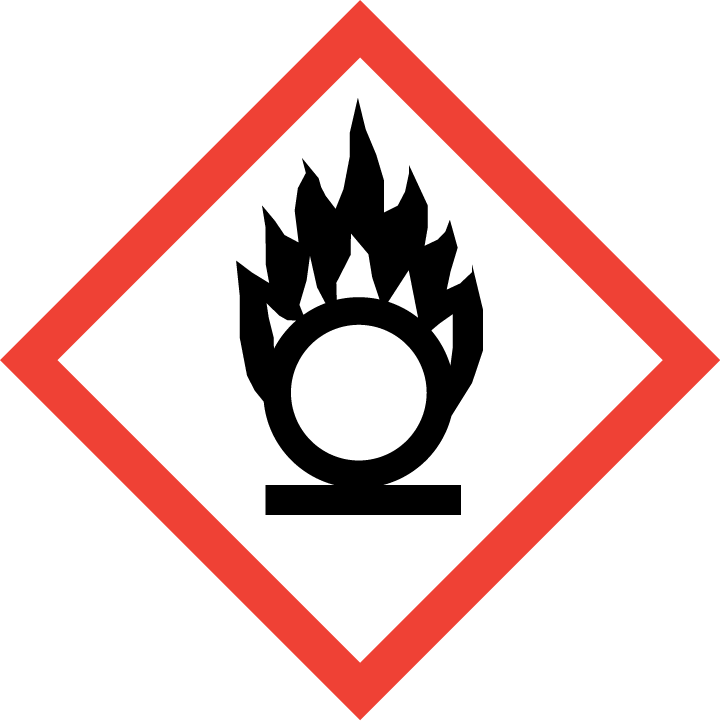
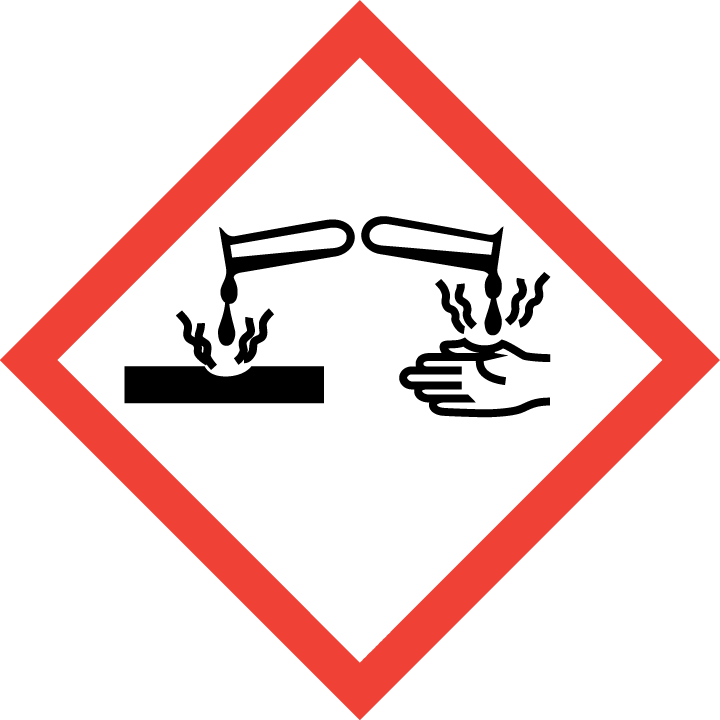

Signal word: Danger
Hazard statements
- H271 May cause fire or explosion; strong oxidiser.
- H332 Harmful if inhaled.
- H302 Harmful if swallowed.
- H314 Causes severe skin burns and eye damage.
Typical precautionary statements
- P210 Keep away from heat, hot surfaces, sparks, open flames and other ignition sources. No smoking.
- P220 Keep away from clothing and other combustible materials.
- P260 Do not breathe dust/fume/gas/mist/vapours/spray.
- P280 Wear protective gloves/protective clothing/eye protection/face protection.
- P301+P330+P331 IF SWALLOWED: Rinse mouth. Do NOT induce vomiting.
- P305+P351+P338 IF IN EYES: Rinse cautiously with water for several minutes. Remove contact lenses, if present and easy to do. Continue rinsing.
- P310 Immediately call a POISON CENTER/doctor/ …
- P371+P380+P375 In case of major fire and large quantities: Evacuate area. Fight fire remotely due to the risk of explosion.
Occupational exposure limits
| Country | Limit (8 h) | Short-term | Source |
|---|---|---|---|
| DE | 0.5 ml/m³ / 0.71 mg/m³ | Excursion factor 1(I) | TRGS 900 (as amended 5 June 2026) |
What to watch in your SDS
- Section 2: apply the specific concentration limits: H271 ≥ 70%, H272 50–70%, H314 ≥ 50%, H315 35–50%, H318 8–50%, H319 5–8%.\n- Section 7 and 10: describe incompatible materials and decomposition with oxygen release.\n- Section 14: solutions are typically UN 2984 (8–20%), UN 2014 (20–60%) or UN 2015 (above 60%), class 5.1.\n- Section 15: hydrogen peroxide above 12% is a restricted explosives precursor under Regulation (EU) 2019/1148.
Sample SDS preview
This full 16-section sample SDS was generated in SDS Studio™ for the substance, with a fictitious supplier. It shows the format your own SDS gets. Download the sample PDF or create the SDS for your own product.
Need an SDS for a product containing Hydrogen peroxide?
Build a complete EU SDS with CLP classification in about 10 minutes, in up to 28 languages. Your first project is free, no card needed.
Make it your own →Frequently asked questions
How is Hydrogen peroxide classified under CLP?
Harmonised classification (CLP Annex VI): Ox. Liq. 1, H271; Acute Tox. 4 (Inhalation), H332; Acute Tox. 4 (Oral), H302; Skin Corr. 1A, H314.
What H-statements apply to Hydrogen peroxide?
H271 (May cause fire or explosion; strong oxidiser.), H332 (Harmful if inhaled.), H302 (Harmful if swallowed.), H314 (Causes severe skin burns and eye damage.).
What should an SDS for a mixture with Hydrogen peroxide include?
Classify the mixture by its own data and concentration limits, list Hydrogen peroxide in Section 3 with CAS 7722-84-1, add the national exposure limits of every target country in Section 8, and check transport and national lists in Sections 14 and 15.
Data from the ECHA C&L Inventory. Information only; it does not replace the SDS of your supplier. Last verified: 2026-11-12.