 SDS Studio™
Identifiers
| CAS number | 628-63-7 |
|---|---|
| EC number | 211-047-3 |
| CLP Index number | 607-130-00-2 |
| Formula | C7H14O2 |
| Synonyms | pentyl acetate |
Classification
Harmonised classification (CLP Annex VI): Flam. Liq. 3, H226
Label elements
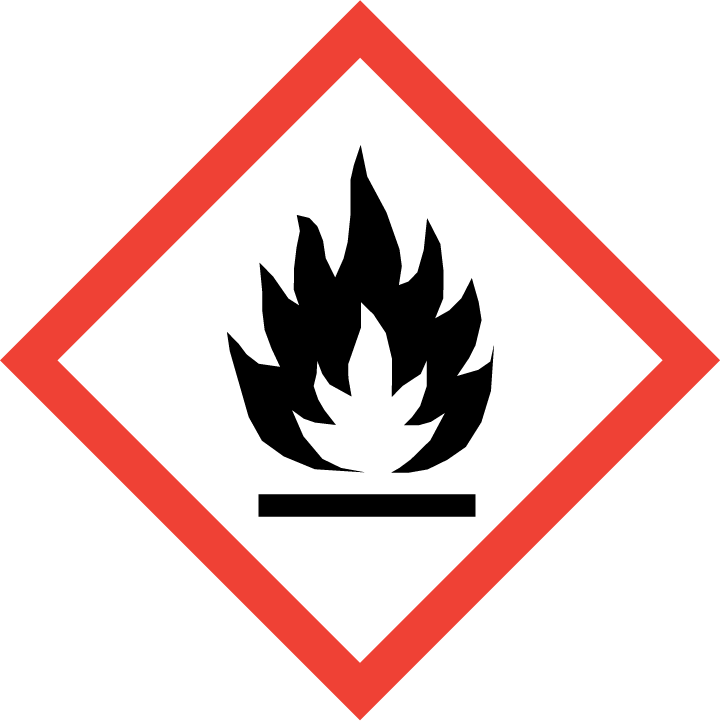
Signal word: Warning
Hazard statements
- H226 Flammable liquid and vapour.
- EUH066 Repeated exposure may cause skin dryness or cracking.
Typical precautionary statements
- P210 Keep away from heat, hot surfaces, sparks, open flames and other ignition sources. No smoking.
- P403+P235 Store in a well-ventilated place. Keep cool.
Occupational exposure limits
| Country | Limit (8 h) | Short-term | Source |
|---|---|---|---|
| HU | 50 ppm / 270 mg/m³ | 100 ppm / 540 mg/m³ | 5/2020. (II. 6.) ITM rendelet, 1. melléklet |
What to watch in your SDS
- Section 2: include the supplemental statement(s) EUH066.\n- Section 14: confirm the UN number and packing group with the supplier's transport classification.
Need an SDS for a product containing n-Pentyl acetate?
Build a complete EU SDS with CLP classification in about 10 minutes, in up to 28 languages. Your first project is free, no card needed.
Make it your own →Frequently asked questions
How is n-Pentyl acetate classified under CLP?
Harmonised classification (CLP Annex VI): Flam. Liq. 3, H226.
What H-statements apply to n-Pentyl acetate?
H226 (Flammable liquid and vapour.), EUH066 (Repeated exposure may cause skin dryness or cracking.).
What should an SDS for a mixture with n-Pentyl acetate include?
Classify the mixture by its own data and concentration limits, list n-Pentyl acetate in Section 3 with CAS 628-63-7, add the national exposure limits of every target country in Section 8, and check transport and national lists in Sections 14 and 15.
Data from the ECHA C&L Inventory. Information only; it does not replace the SDS of your supplier. Last verified: 2026-11-12.