 SDS Studio™
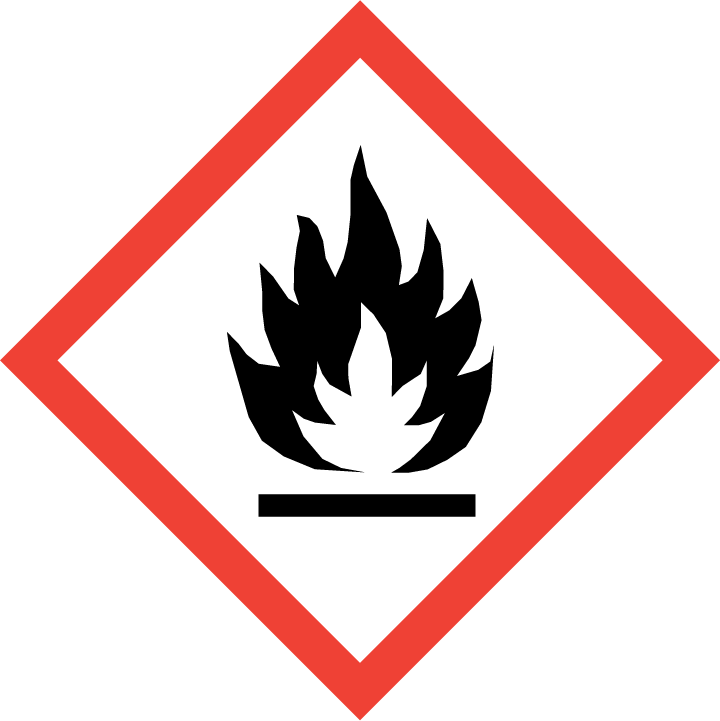
Download: GHS02 Flame
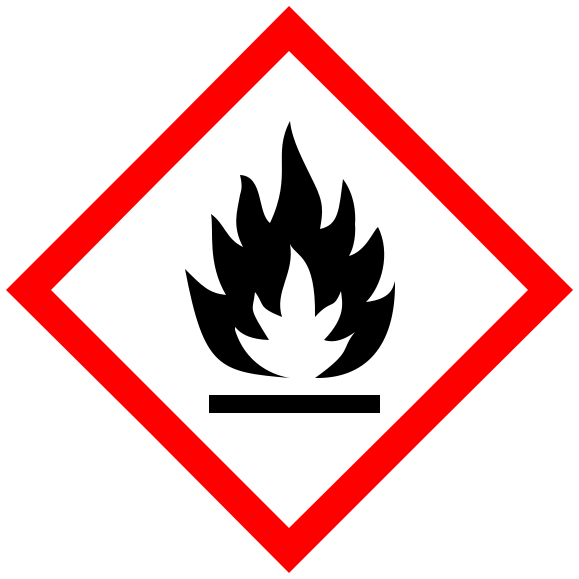
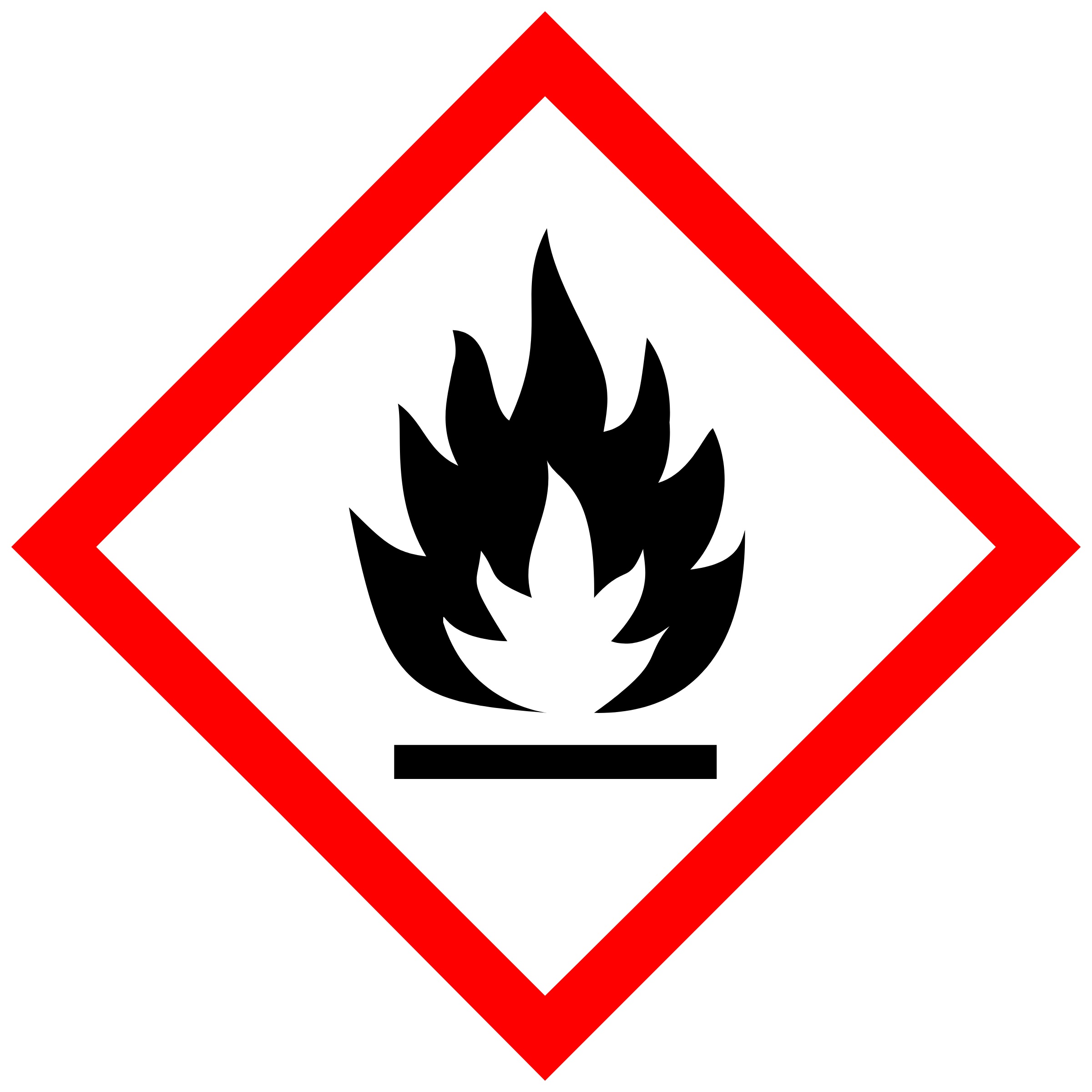
Download all 9 pictograms (ZIP) ↓
CLP Annex I 1.2.1: each pictogram must cover at least 1/15 of the label area, minimum 1 cm², with a red frame wide enough to be clearly visible.
GHS02 Flame is a CLP hazard pictogram. Flammable gases, aerosols, liquids and solids, desensitised explosives, self-reactive substances, pyrophoric, self-heating and water-reactive substances, organic peroxides.
Hazard statements with this pictogram
| H206 | Fire, blast or projection hazard; increased risk of explosion if desensitising agent is reduced. |
| H207 | Fire or projection hazard; increased risk of explosion if desensitising agent is reduced. |
| H208 | Fire hazard; increased risk of explosion if desensitizing agent is reduced. |
| H220 | Extremely flammable gas. |
| H222 | Extremely flammable aerosol. |
| H223 | Flammable aerosol. |
| H224 | Extremely flammable liquid and vapour. |
| H225 | Highly flammable liquid and vapour. |
| H226 | Flammable liquid and vapour. |
| H228 | Flammable solid. |
| H232 | May ignite spontaneously if exposed to air. |
| H241 | Heating may cause a fire or explosion. |
| H242 | Heating may cause a fire. |
| H250 | Catches fire spontaneously if exposed to air. |
| H251 | Self-heating: may catch fire. |
| H252 | Self-heating in large quantities; may catch fire. |
| H260 | In contact with water releases flammable gases which may ignite spontaneously. |
| H261 | In contact with water releases flammable gases. |